
Water Tank Cleaning in Dubai
Water tank cleaning removes the sediment, algae and bacterial film that build up in villa and rooftop tanks, and ends with a flushed, refilled tank and a written record of the job. Send a photo of the tank hatch on WhatsApp and we coordinate a partner technician and a quote.
Prices are quoted per job. Send details on WhatsApp or call to get yours.
On this page
- When you do not need a clean yet
- Why tanks need regular cleaning at all
- What a proper cleaning visit involves
- Villa underground tanks and rooftop building tanks
- How to choose a water tank cleaning company in Dubai
- What a good job record looks like
- Signs the tank needs a visit now
- What affects the quote
- What to prepare before the visit
- What is not included
- How booking works
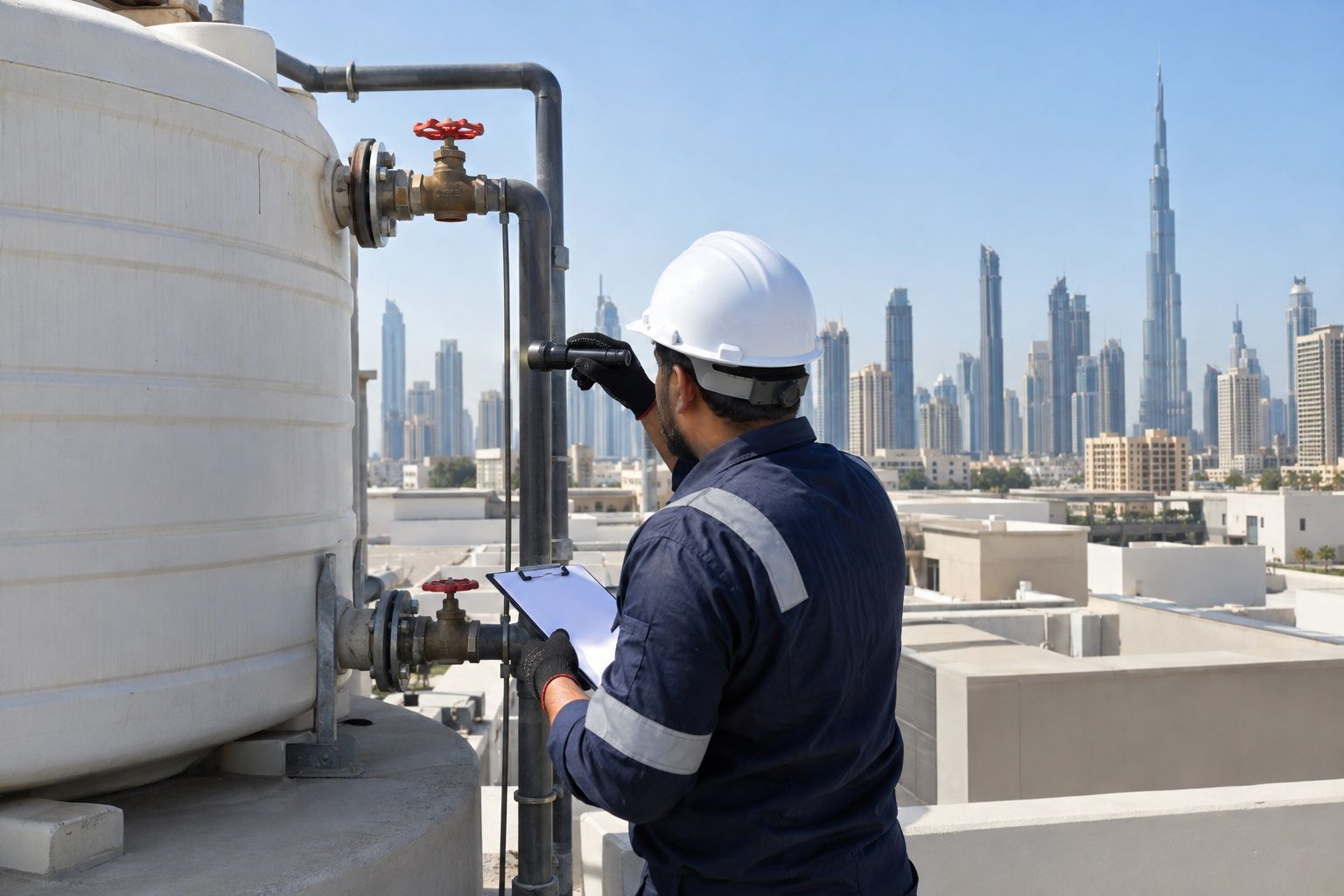
Water tank cleaning in Dubai is the scheduled draining, scrubbing, disinfection and refilling of the storage tank that feeds a villa or a building. It matters because the tank, not the mains supply, is where stored water goes wrong, and the first sign is often a smell or a cloudy glass long after the problem started. We coordinate partner technicians who do the job and we send you a quote after you share photos of the tank.
When you do not need a clean yet
A tank that was cleaned and recorded recently, has a sealed cover, an intact vent mesh and shows no change in smell, colour or pressure does not need a visit because a salesperson says so. Check the record first. If you hold a signed completion record inside the interval your building or the municipality sets, leave it alone and inspect the cover and vent instead. Book earlier than the schedule only when something has changed: a smell, brown or cloudy water after standing overnight, grit in aerators and filters, a torn vent mesh, a tank opened for repair, or a property you have just taken over with no paperwork.
Why tanks need regular cleaning at all
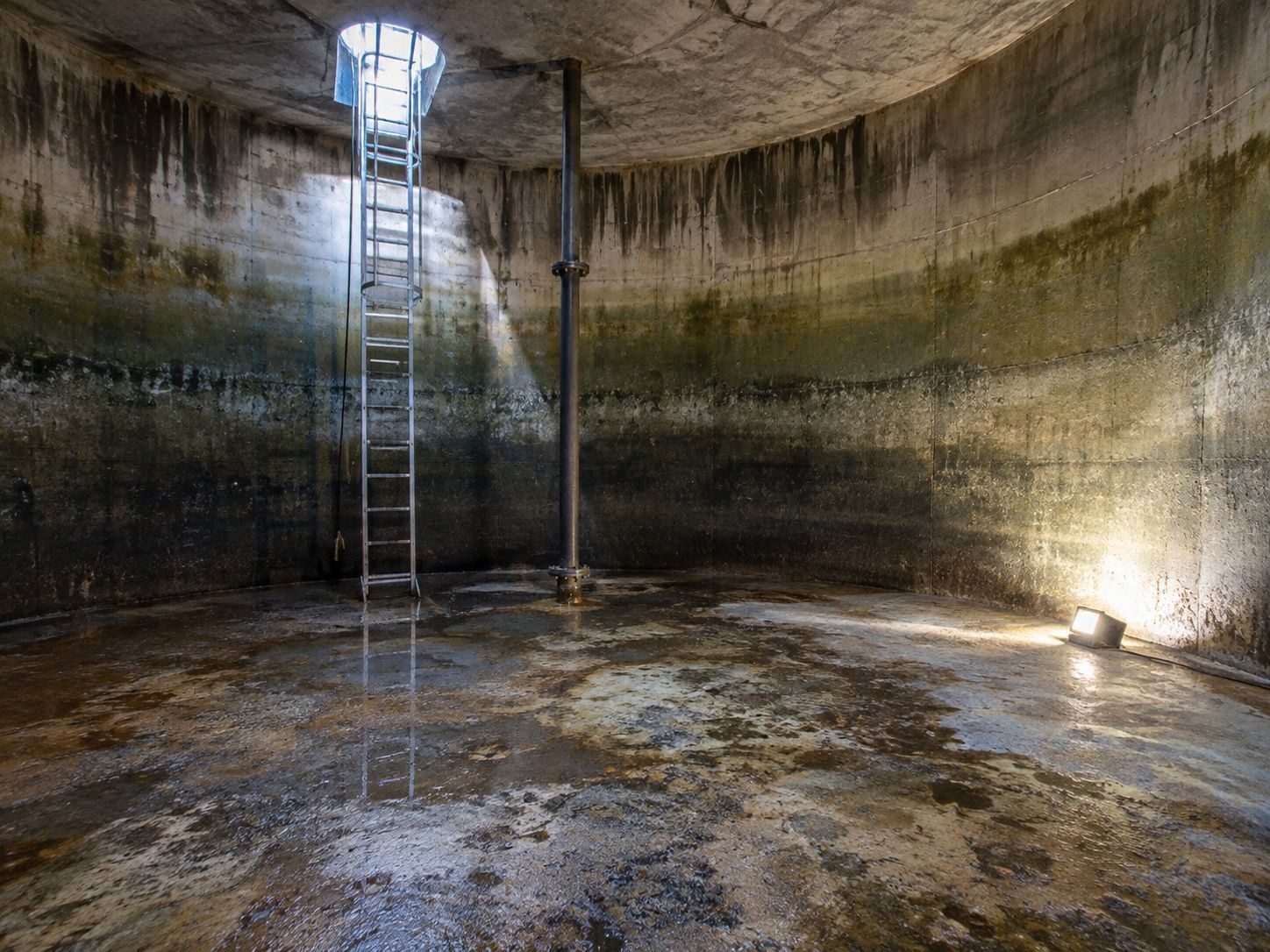
Even a tank filled with clean mains or tanker water does not stay that way, because storage is stillness and stillness lets contamination build. Every fill carries fine silt and mineral particles that settle on the floor. Over months they form a soft bed that fresh inflow does not disturb. Bacteria attach to that bed and form a slimy film across the floor and up the walls, which ordinary flushing does not remove.
Dubai’s heat speeds this up. A rooftop tank in direct sun warms the stored water, and warm water lets bacteria multiply faster while the disinfectant residual carried in from the mains decays sooner. Any light entering through a cracked cover or hatch feeds algae, which adds green staining, an earthy smell and more organic material for bacteria. In a clean tank the residual protects the water; in a tank with sediment and film it is used up quickly.
What a proper cleaning visit involves
A proper clean is a sequence in which each stage depends on the one before it.
- Isolate and drain. The inlet is shut so no fresh water enters mid-job, and the tank is pumped down. Multi-tank installations are normally done one tank at a time so supply is not lost entirely.
- Remove sediment. With the tank empty, sludge on the floor is wet-vacuumed or removed by hand. This is the material flushing never reaches, and it is often the first time the owner sees how much had built up.
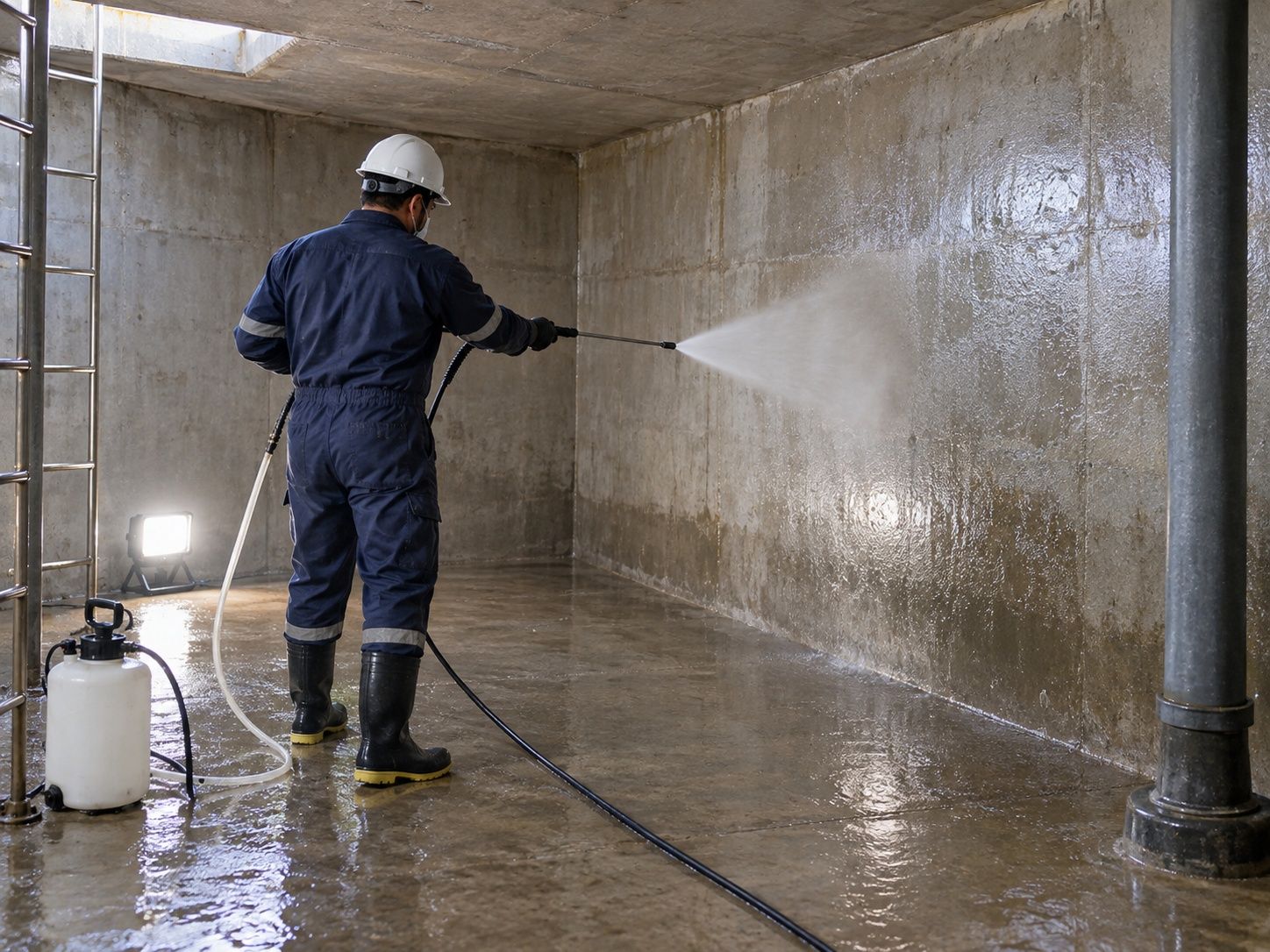
- Scrub every surface. Walls, floor, corners, the floor-to-wall joint, the area around the inlet and outlet and the underside of the cover are scrubbed to break the biofilm, because biofilm starts where water moves least.
- Disinfect. A disinfectant rated for potable water is applied to every interior surface and left for the contact time its label requires.
- Rinse thoroughly. The disinfectant is rinsed out until the rinse runs clear. Rushing this stage is what leaves a chemical smell at the tap.
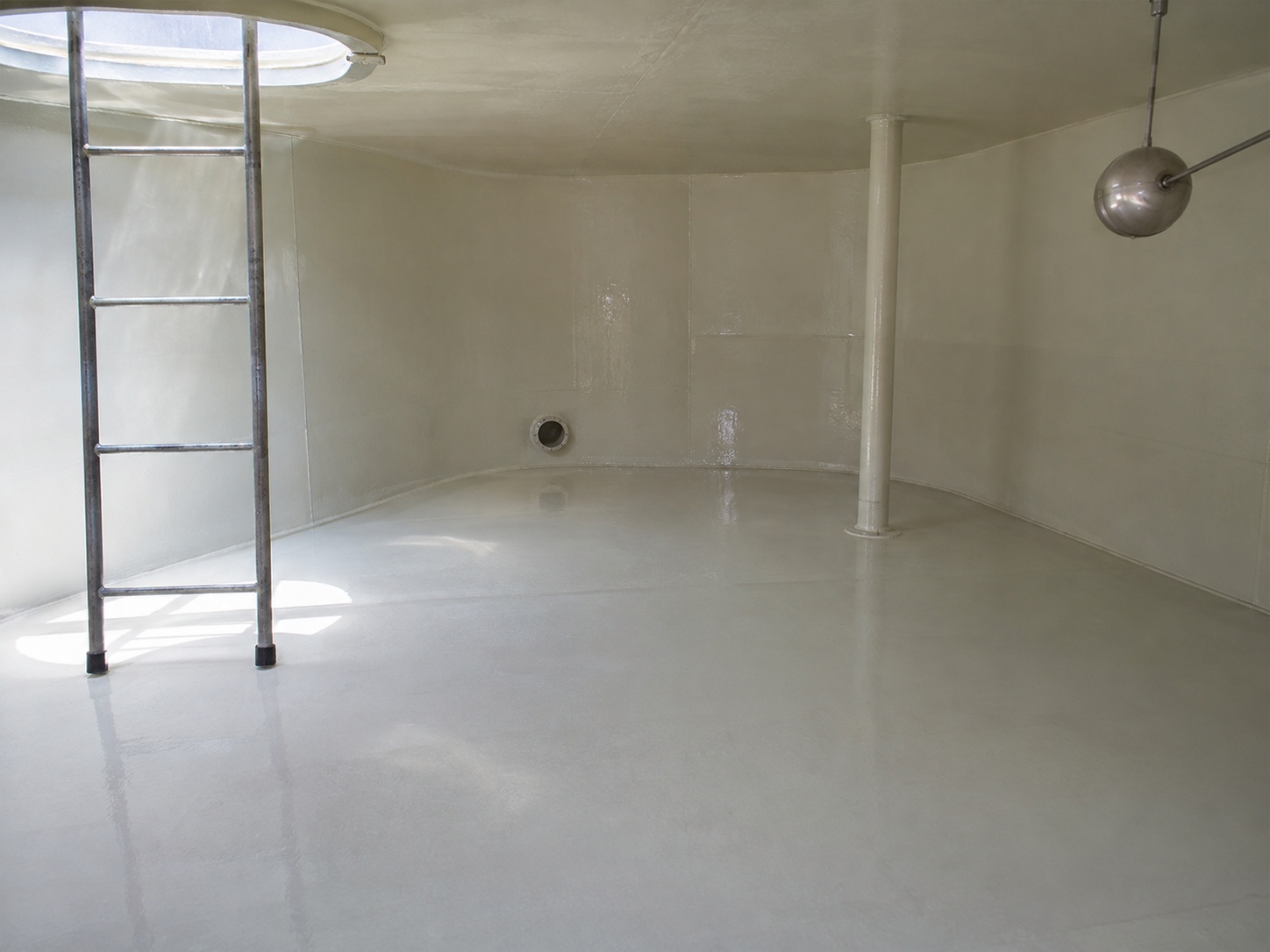
- Refill and check. The tank is refilled, the first draw is run through the pipework, and the cover, vent screen, float valve and seals are inspected. A torn vent mesh or ill-fitting cover is a common reason a tank dirties again soon after a clean.
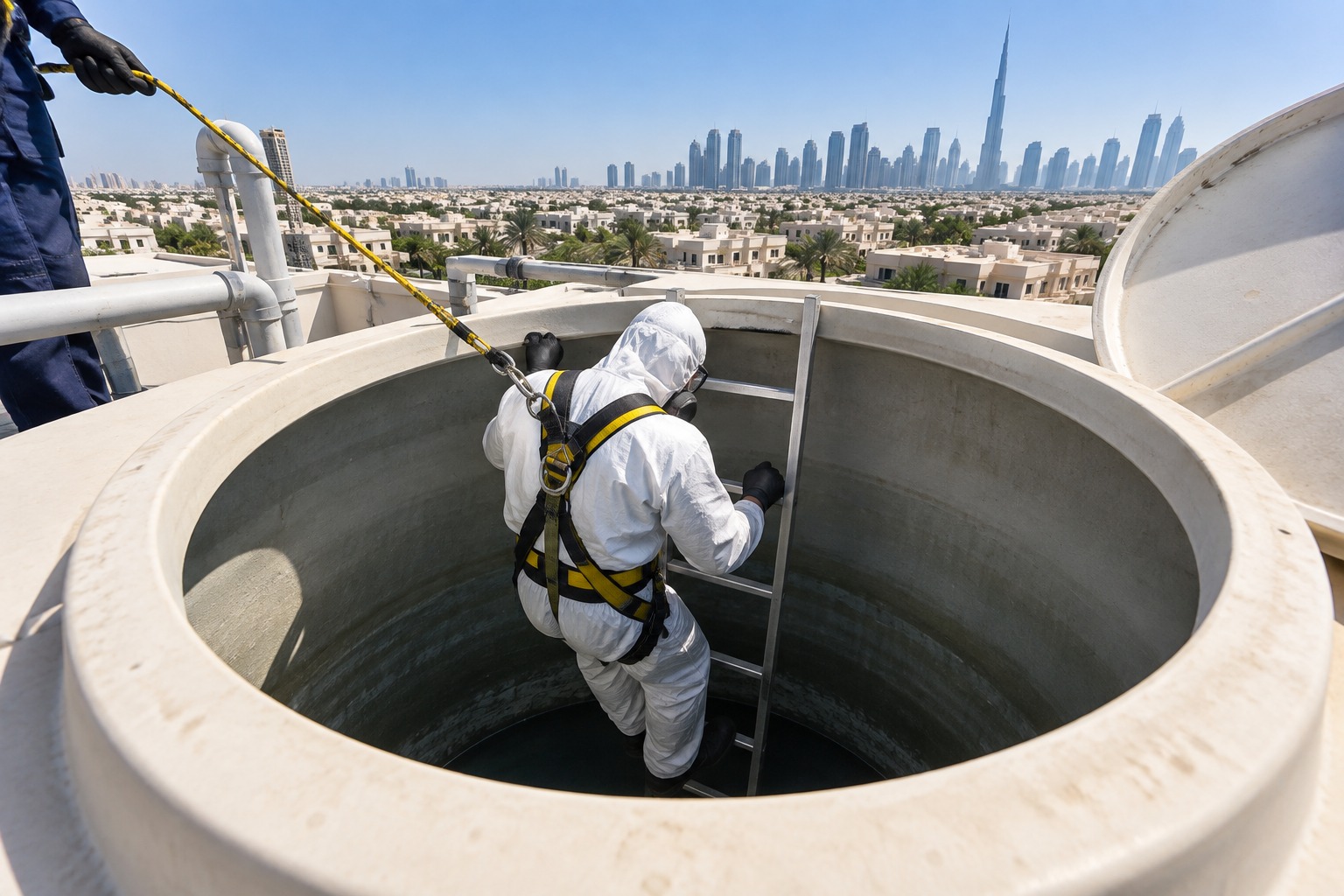
Confined-space safety is part of the job on underground villa tanks: ventilation, lighting and a second person at the access point. On rooftops it is harness and edge protection. If a provider does not mention either, ask.
Villa underground tanks and rooftop building tanks
Villa tanks are usually a single concrete or GRP chamber under the garden or driveway, feeding the property through a pump. Access is through a manhole, the household is without water for a few hours, and these tanks are often the ones that have gone longest without inspection. A cracked or ill-fitting cover can let in garden soil and insects on top of the usual sediment. Most villa jobs are booked by the owner or, if rented, agreed with the landlord. See our villa maintenance service if you would rather have the tank on a periodic checklist alongside plumbing and AC.
Rooftop tanks serve apartment buildings and commercial properties, usually as a bank of tanks fed from a pump room below. The roof access, the number of tanks and the residents below make scheduling the main variable: building management sets the water-off window and tells residents. If you live in an apartment, this is normally your management company’s job, not yours.
How to choose a water tank cleaning company in Dubai
Searches for the best water tank cleaning company in Dubai tend to return lists of names with no way to tell them apart. A better filter is five questions you can ask by message, in this order of how much they reveal:
- Approval. Ask to see the provider’s current Dubai Municipality approval for tank cleaning. Check that the activity named covers tank cleaning, the dates are valid and the company name matches the quote. If you want certainty, confirm with the municipality. We do not claim approval for Dubai Service Hub or for any partner on this page, so ask whoever is quoting you to show theirs.
- Disinfectant. The product name and whether it is rated for potable water. “A strong chemical” is a bad answer.
- Record. What the completion record contains and whether it is signed.
- Safety. A second person at the access point, ventilation for underground tanks and edge protection on roofs.
- Defects. Whether they will tell you about a torn vent mesh, cracked cover or failing float valve instead of quietly leaving it.
Price alone is a weak signal. The cheapest quote often leaves out the sediment removal or the rinse. For a deeper walk-through of verification and what approval does and does not cover, read the guide on how to choose a water tank cleaning company and our explainer on what municipality-approved tank cleaning means.
What a good job record looks like
A record is the thing building managers, landlords and inspectors ask for, and it is the thing most households do not have. A usable one names the property and the tank (for example “villa roof tank” or “ground tank 2 of 3”), the date, the method in plain words, the disinfectant product, the provider’s name and the signature of the person who did the work. If the provider includes before and after photos, they are a useful extra, but a photo is not a substitute for a signed record. Keep every record in one folder and write the next due date on the front.
We cannot tell you what penalty, if any, applies to a missing record in your building. Ask your management company or the municipality directly; the safe habit is simply to have the paper.
Signs the tank needs a visit now
- Odour from the tap. A musty or earthy smell points to algae or biofilm; a sharp chlorine smell appearing after months of nothing can mean disinfectant is reacting with organic matter.
- Colour. Yellow, brown or cloudy water in a glass after standing overnight.
- Grit. Dark flecks at the bottom of a kettle or filter cartridges that clog far sooner than before.
- Pressure. Sediment collects in tap aerators, shower heads and float valves long before the pump is at fault.
- No paperwork. A new tenancy or purchase where nobody can date the last clean.
Any one is worth acting on. Two together usually mean overdue. More detail is in our guide to the signs your water tank needs cleaning.
What affects the quote
We do not publish a fixed price, because the factors that set it cannot be judged from the street:
- tank volume and the number of tanks;
- how deep the sediment is and how long since the last clean;
- access: manhole depth, roof height, working-at-height needs;
- water disposal and refill arrangements;
- building coordination and the water-off window.
A single villa tank and a bank of rooftop tanks are different jobs, and a per-tank figure quoted for one says nothing about the other. The reliable route is a photo of the hatch and tank area, the tank count and an approximate capacity, and a confirmed quote before anyone travels.
What to prepare before the visit
- Tell us whether the tank is underground, ground-level or on the roof, and send a photo of the hatch.
- Make sure the access point and a path to it are clear, including any gate or lift.
- Store drinking and cooking water for the off-period; stop washing machines and dishwashers from starting automatically.
- Tell building security or management about the visit and any permit they need.
- Switch off any pump timer if the technician asks, so it does not run dry.
What is not included
Cleaning does not repair a leaking tank, replace a float valve, fix a pump or change corroded pipework. Those are maintenance jobs quoted separately, even when the same visit uncovers them. It also does not fix a problem that sits in the plumbing after the tank, such as old galvanised pipework giving brown water. If the water is still discoloured after a proper clean, tell the technician so the pipework can be checked.
How booking works
Message us on WhatsApp with the property type, the area, a photo of the tank hatch and the tank count. We coordinate an independent partner technician, you receive a quote and an earliest available window, and you confirm before anything is booked. After the job, ask for the completion record the same day and keep it.
Frequently asked questions
- How often should a water tank be cleaned in Dubai?
- Cleaning intervals and approval requirements are set by the authority, so the number to follow is the one in its current published guidance or in your building management's schedule. Ask the provider to show current approval. Rooftop tanks in direct sun, tanks serving many households and tanks with a damaged cover or vent mesh sit at the short end of any range. If nobody can say when yours was last cleaned, treat it as overdue.
- What should a water tank cleaning record show?
- The property and tank location, the date, the method used, the disinfectant product, the name of the company and the person who signed it off. A one-line message saying the job is done is not a record. Keep each record in one folder with the next due date written on the front, because management companies and inspections ask for it.
- How do I choose a water tank cleaning company in Dubai?
- Ask for the provider's current Dubai Municipality approval and check that the activity named covers tank cleaning and the dates are valid. Ask which disinfectant they use, what the completion record contains, how they handle confined-space safety and whether they will report a damaged cover or float valve. A provider who answers all five plainly is worth booking. Be wary of a quote given with no questions about the tank.
- Is the water safe to use straight after cleaning?
- Once the tank has been scrubbed, disinfected, rinsed and refilled, run the taps until the water is clear and has no chemical smell. A faint chlorine smell at one tap usually clears after a couple of minutes of running. If a smell or cloudiness persists after a day, tell the technician who did the job rather than assuming it will settle.
- What is the difference between a villa tank and a rooftop tank job?
- A villa tank is usually one underground or ground-level chamber reached through a manhole, so the work is confined-space safety and a household that is without water for a few hours. A rooftop tank is reached at height with a harness, often belongs to a set of tanks and serves every apartment below, so the drain-and-refill has to be agreed with building management. The cleaning steps are the same; access and scheduling change.
- How long will the water be off during a tank clean?
- For a single villa tank, plan for a few hours, with draining and refilling taking most of that time. Rooftop sets take longer and are normally done one tank at a time so the building is never fully dry. Ask for the expected window when you book and fill a few containers beforehand for drinking and cooking.
- Do I book the clean if I rent an apartment?
- Usually not. In an apartment building the tanks are common property, so cleaning is arranged by the building owner or management company and you can ask them for the date of the last record. In a rented villa the tank is often the landlord's responsibility under the tenancy, so check your contract and send the landlord the photos before booking anything yourself.
- How do I get a quote for water tank cleaning?
- Send a photo of the tank hatch or the rooftop tank area, the number of tanks, the approximate capacity if you know it, and whether the tank is underground or on the roof. Quotes depend on tank volume, sediment depth, access and coordination, so a price given without those details is a guess. We coordinate the partner technician and confirm the figure before the visit.
Areas we cover for this service
Area pages with building-type notes, local pricing and availability for that community.
Related services
Jobs people often book alongside this one.
Related guides
Straight answers to the questions people ask before booking this service.
Common Plumbing Problems in Dubai Villas and Their Causes
How to Choose a Water Tank Cleaning Company in Dubai
Dubai Municipality Water Tank Cleaning Approval Explained
Preparing Your Villa for Dubai Summer: A Maintenance Checklist
Signs Your Water Tank Needs Cleaning
What Is Included in a Villa Maintenance (AMC) Contract?
Book a water tank cleaning visit on WhatsApp
Prices are quoted per job. Send details on WhatsApp or call to get yours.